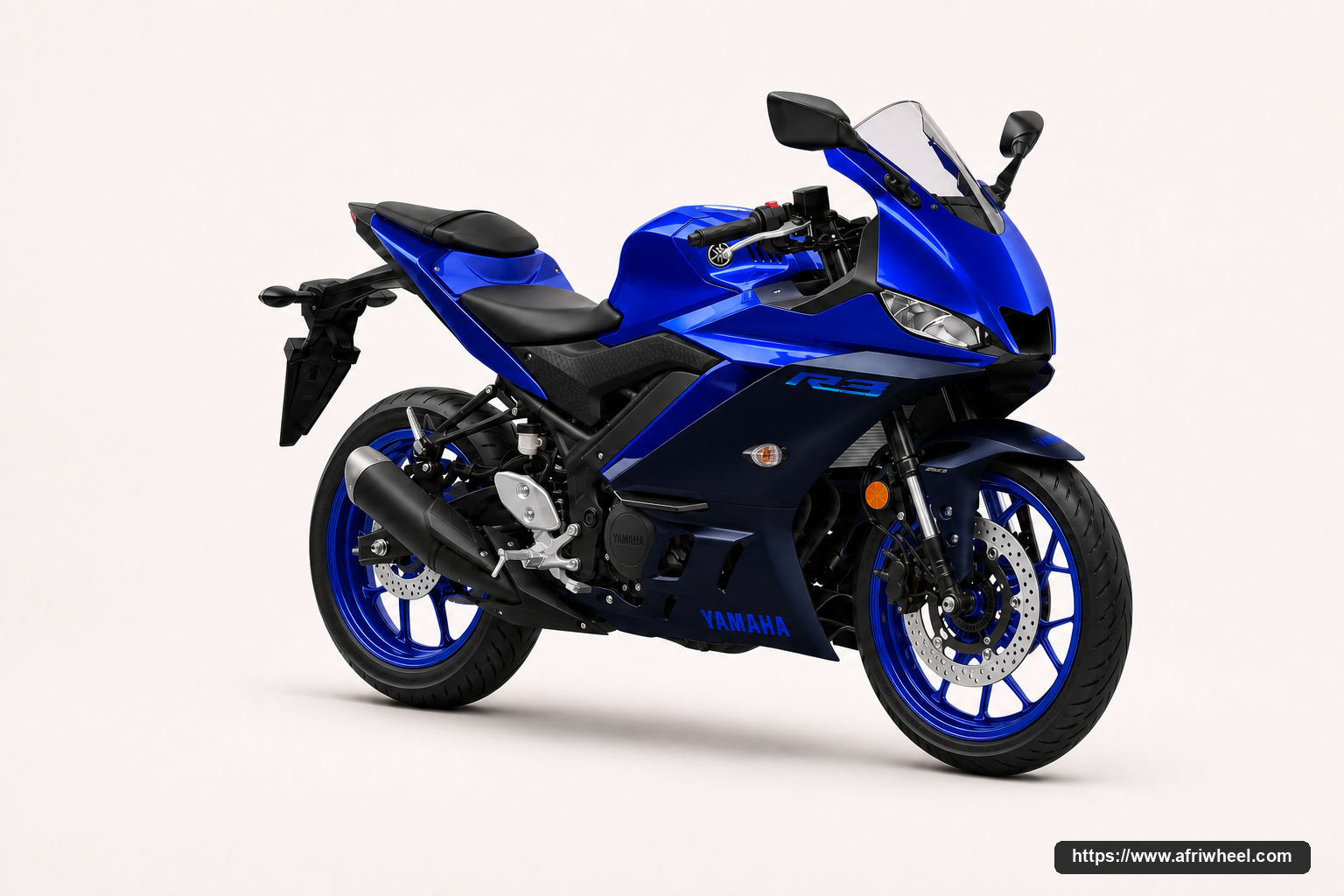
YZF R3 buyer overview
For a derivative-level decision, the relevant product is YZF R3. It sits under the YZF R3 model record but retains its own price, transmission and confirmed specification set. The transmission is recorded as Constant-mesh 6-speed manual. YZF R3 is the sole mapped derivative for this South African model entry. Its transmission, confirmed equipment and observed price therefore define the standard comparison point; colours and dealer-installed accessories do not create extra mechanical variants. Keeping that boundary clear protects the buyer from comparing one trim's price with another trim's equipment, or treating an optional colour and accessory package as a different mechanical variant.
The powertrain facts attached to this derivative include engine capacity 321 cc, engine cycle 4-stroke, cylinder layout Inline twin, cooling Liquid-cooled, maximum power 30.9 kW, power peak 10,750 rpm, maximum torque 29.5 Nm, torque peak 9,000 rpm, transmission Constant-mesh 6-speed manual, gear count 6, clutch Wet multiplate, and final drive Chain. They are kept at derivative level because a related model can use a different transmission or calibration. No speed, economy or maintenance promise is extrapolated from them. The practical checks are straightforward: verify control operation on the actual unit, obtain the correct manual, identify the required fuel and lubricants, and understand chain, belt or shaft care as applicable. Competition owners should also clarify pre-delivery setup and which consumables or inspections are expected between sessions.
Confirmed packaging entries include fuel capacity 14 litres, overall length 2,090 mm, overall width 735 mm, overall height 1,140 mm, wheelbase 1,380 mm, ground clearance 160 mm, seat height 780 mm, and kerb weight 169 kg. They are valuable screening tools for riders with strict seat-reach, trailer or storage requirements. They do not tell the entire ergonomic story. Lever span, bar position, seat contour, rider strength and surface camber all alter confidence. Fuel, tools and fitted equipment alter operating mass. Before purchase, reproduce the most demanding routine task that is safely possible: pushing into the garage, loading a trailer, placing feet down, standing on the pegs or accessing the storage area, depending on the product's purpose.
The exact derivative is supported by the following cycle-part facts: frame Diamond, front suspension Telescopic fork, front suspension travel 130 mm, rear suspension Swingarm, rear suspension travel 125 mm, front brake Hydraulic single disc, front disc diameter 298 mm, rear brake Hydraulic single disc, rear disc diameter 220 mm, and ABS Dual-channel ABS. Wheel and tyre entries are front wheel diameter 17 inches, rear wheel diameter 17 inches, front tyre 110/70R17 M/C 54H, and rear tyre 140/70R17 M/C 66H. Together they provide a useful basis for comparing fitment and service needs. They should not be turned into a subjective handling verdict without testing. Check whether tyres use tubes, which ratings are approved, and what pressures apply to load or terrain. Understand every adjuster before changing it, and inspect the braking and suspension system after transport or hard off-road use. Similar-looking components on another Yamaha are not guaranteed replacements.
The verified equipment picture for this derivative contains headlight LED, and local-use status Listed in Yamaha South Africa's road-motorcycle catalogue, while the exact status of traction control, instrument display, phone and navigation support, and under-seat storage remains undecided by the reviewed material. That is a transparent limit, not an invitation to guess. Before signing, confirm the software, phone pairing, lights, keys, security and any included tools or charging ports. Ask which items in promotional photography are optional. Practical accessories should be priced separately and checked for load, warranty and dimension effects. An exact written list is especially valuable where derivatives share the same bodywork.
The riding position and performance intent of YZF R3 make fit, skill and intended venue central to the decision. Track-derived hardware does not guarantee that a rider will prefer the ergonomics on ordinary roads, and sophisticated aids do not enlarge the available grip or replace braking technique. Before purchase, compare control reach, heat, low-speed steering, insurance terms, tyre replacement cost and whether the motorcycle will be used mainly for road miles, occasional track days or focused competition support.
The commercial decision needs the same derivative discipline as the technical one. The recorded South African price observation is R129,950, described as dealer advertised, and was checked on 2026-08-10. It is a vehicle-price reference rather than a promise of an on-road total; registration, delivery, finance, insurance, accessories and dealer preparation require separate confirmation. Finance should be compared by deposit, term, interest, fees, balloon payment and total repayment, not monthly instalment alone. The order should state model year, colour, standard equipment, accessory part numbers, tax treatment, preparation, delivery timing and cancellation terms. An insurance quote should use this exact derivative. If the product is upcoming or price is withheld, a reservation is not proof of allocation or final specification; obtain dated written terms before committing funds.
The information not safe to claim is just as relevant as the specification list. For YZF R3, notable undecided buyer fields include claimed fuel consumption, published dry weight, traction control, instrument display, display size, phone and navigation support, and under-seat storage. Do not read those blanks as zero, false or unavailable equipment, and do not fill them from another country simply because the badge matches. Ask for the exact owner, service, warranty or competition document and retain it with the purchase file. This derivative is best aligned with newer sport riders wanting a lightweight twin-cylinder supersport with everyday road usability; it is a weaker match for buyers requiring large-capacity acceleration, touring weather protection or relaxed passenger accommodation. Those boundaries should outweigh styling or a promotional finance figure.
A defensible decision on the YZF R3 comes from four matched checks: the derivative identity, the confirmed hardware, the rider's real use and the complete ownership quote. Start with fit and operating environment, then confirm transmission and controls, running gear, equipment and local-use status on the actual product. Compare its price only with alternatives stated on the same basis. Finally, document unresolved questions before paying a deposit. If those checks support the buyer's needs, the YZF R3 can remain on the shortlist for its intended role; if they expose a mismatch in skill, legality, ergonomics, maintenance or total cost, the correct response is to choose a better-fitting product rather than explain the mismatch away. Record every answer against the full YZF R3 derivative description so the final handover can be checked against the same evidence used to make the choice. Keep that completed checklist with the quotation, invoice, manuals and service records for later reference.